A carbon footprint is the total greenhouse gas emissions tied to something: a person, a company, a product, a trip, or even an event. It includes what you emit directly plus the emissions that happen “behind the scenes” to make, move, power, and dispose of the things you use.
You’ll often see it written as CO2e, which is just a way to bundle different greenhouse gases into one common unit so we can compare impact apples to apples.
EACR Inc is a sustainability focused electronics recycling company with a zero landfill policy, committed to helping protect the environment through responsible recycling.
Carbon footprint meaning: the definition that actually matters
A carbon footprint is the total greenhouse gas emissions connected to an activity or thing, including direct emissions and indirect emissions.
It applies to:
- Individuals and households
- Companies and organizations
- Products and services
- Events and projects
You’ll also hear it described as “lifecycle” or “cradle to grave” impact, meaning it considers the full chain: raw materials, manufacturing, shipping, use, and what happens at the end.
Quick examples
- “Your weekend trip footprint includes gas burned plus the emissions tied to producing the gasoline.”
- “A laptop footprint includes manufacturing, shipping, electricity during use, and end of life handling.”
How a carbon footprint is measured: CO2e explained
Greenhouse gases: not just CO2
CO2 is the headline gas, but it’s not the only one. Carbon footprints often include:
- Carbon dioxide (CO2)
- Methane (CH4)
- Nitrous oxide (N2O)
- Fluorinated gases (like some refrigerants)
Some of these trap heat more powerfully than CO2, even if they show up in smaller amounts. That’s why we don’t just count “tons of CO2” and call it a day.
CO2e and GWP: the “conversion” idea
CO2e means carbon dioxide equivalent: one number that represents total warming impact across multiple gases.
GWP means global warming potential: the factor used to convert a gas into its CO2e equivalent. In plain terms: it’s how we translate methane, nitrous oxide, and others into the same “language” as CO2.
One important note: CO2e is an estimate tool, not a perfect reading. It’s meant to be consistent and useful for decision making, not a magical exact score.
Units people will see
You’ll usually see footprints reported as:
- pounds CO2e
- kg CO2e
- metric tons CO2e per year
For organizations, it often shows up as:
- annual totals
- per unit metrics (per employee, per product, per shipment, per dollar of revenue)
What counts in a carbon footprint: direct vs indirect emissions
Direct emissions: things you burn or control
Direct emissions are the ones that come from sources you control or own. Examples:
- gas burned in a vehicle you drive
- natural gas used for heating
- onsite fuel use (generators, forklifts, equipment)
These are usually the easiest to picture because you can literally point at the source.
Indirect emissions: electricity and supply chain
Indirect emissions come from what you use, buy, and depend on. Examples:
- electricity used at home or in an office
- shipping, manufacturing, and suppliers
- cloud services, data centers, streaming
- employee travel and commuting
Most footprints are bigger in the indirect category than people expect, because supply chains are long and everything adds up.
Primary vs secondary footprint: a simple personal model
Primary footprint: the emissions you influence directly
Primary footprint is your day to day, direct influence zone:
- home energy choices and thermostat behavior
- miles driven and flight choices
If you change how you heat, cool, or travel, you usually see an impact here first.
Secondary footprint: the emissions baked into what you buy
Secondary footprint is the “embedded” emissions in stuff and services:
- food production
- clothing and consumer goods
- electronics manufacturing
- delivery and returns
If you only focus on driving, you miss the supply chain side.
Carbon footprint vs carbon emissions: what people mix up
Carbon emissions are the gases released: CO2, methane, nitrous oxide, and others.
A carbon footprint is the total emissions associated with an activity or product across stages, including indirect emissions that don’t happen right in front of you.
Common confusion: a country can lower emissions at home but still have a big footprint because it imports goods that were produced elsewhere.
Carbon footprint vs ecological footprint: quick comparison
An ecological footprint is about land and resource demand, like how much land area is needed to support an activity or population (food production, water use, and other impacts).
A carbon footprint is about emissions impact, usually expressed as CO2e.
Carbon footprint became especially popular because it’s easier to quantify, compare, and track over time, even when the full system is complex.
What increases your carbon footprint most: the big categories
Transportation
Transportation is a major driver for many people and many businesses:
- personal driving: miles driven and vehicle efficiency
- flying: long haul flights tend to hit harder than a short trip
- delivery logistics: last mile delivery plus returns and re shipping
Household energy
Home energy is often the quiet giant:
- heating and cooling tends to be the biggest piece
- electricity mix varies by region, so the same kWh can have different impact depending on where you live
Food
Food can swing a footprint more than people think:
- higher impact animal products vs plant forward eating
- food waste is a hidden multiplier: wasted food means wasted farming, transport, refrigeration, and packaging too
Goods and services
This is where “normal life” adds up fast:
- clothing and fast fashion
- furniture and materials
- healthcare supply chains
- digital usage and data centers
Carbon footprint examples: put numbers into real life
You don’t need perfect math to understand a carbon footprint. You just need to see what actually drives it in real situations.
Scenario 1: A commuter household
What drives it:
- Miles driven every week
- Vehicle type (SUV vs hybrid vs EV)
- Electricity use (especially if you run a lot of devices)
- Heating fuel and thermostat habits
Reductions that actually help:
- Combine trips and cut “extra” miles
- Use transit when it is realistic
- Keep up with tune ups and tire pressure
- Drive smoother and closer to the speed limit when safe
Scenario 2: A small office or warehouse
What drives it:
- Lighting and electricity use
- HVAC running all day
- Shipping and deliveries
- IT equipment refresh cycles (laptops, monitors, printers)
Reductions that actually help:
- Switch to LEDs and fix “always on” lighting
- Power management: sleep settings, smart strips, shutdown habits
- Procurement policies: buy durable, standardize equipment, avoid rush shipping when possible
- Recycling programs so equipment is not tossed or stockpiled
Scenario 3: A school district or municipality
What drives it:
- Building energy use across multiple sites
- Buses and fleet mileage
- Device refresh cycles: student devices, office tech, IT closets
Reductions that actually help:
- Right size replacement schedules: replace based on condition and need, not just habit
- Standardize devices and parts to simplify repairs
- Run bulk recycling events to clear out old electronics safely and consistently
Scenario 4: An event footprint: weddings and corporate events
What drives it:
- Guest travel and vendor travel
- Venue energy use and climate control
- Rentals and logistics
- Waste: food, packaging, decor, and leftover materials
- E waste: signage, AV gear, old cords, batteries, and damaged devices
Reductions that actually help:
- Plan transport: shuttles, carpool coordination, hotel blocks near venue
- Choose vendors that are local and efficient with logistics
- Build simple waste controls: clear bins, back of house sorting, donate leftovers
- Route e waste and batteries through proper handling instead of trashing them
Why measuring a carbon footprint matters: the practical reasons
People care more once they see how it connects to cost, compliance, and credibility.
- Cost control: Cutting energy waste and reducing unnecessary shipping saves real money. Same with avoiding junk purchases and repeated replacements.
- Compliance and reporting: ESG requirements, sustainability reports, and vendor questionnaires are becoming normal. You need numbers and documentation, not vibes.
- Procurement decisions: When you measure, you can choose lower footprint options: durable equipment, refurbished devices, smarter shipping, better suppliers.
- Risk control: Improper disposal, especially electronics, can create data exposure, compliance headaches, and reputational damage fast.
How to reduce your carbon footprint: realistic steps
This is the “doable” list. Nothing here requires becoming a different person.
Transportation steps
- Combine trips and errands into one route
- Add telework days when possible
- Carpool when the trip pattern is predictable
- Maintain tire pressure and basic maintenance
- Drive closer to the speed limit when safe and avoid aggressive acceleration
Home and building energy steps
- Swap in LEDs where you still have old bulbs
- Use smart thermostats and tighten schedules
- Improve insulation and weather sealing when it makes sense
- Cut standby power: power strips and shut off habits
- Upgrade equipment when the payback is real, not just trendy
Food and waste steps
- Reduce food waste first: plan meals, store food properly, use leftovers
- Adjust the highest impact foods instead of trying to overhaul everything
- Learn compost basics where it is available and convenient
Buying habits and supply chain steps
- Buy less, buy durable, repair what you can
- Buy refurbished where appropriate, especially for electronics
- Reduce returns: measure twice, buy once
- Avoid rush shipping unless it is truly needed
Electronics and carbon footprint: the overlooked category
Electronics feel “clean” because they are small and quiet. The footprint is mostly upstream, and it is bigger than people expect.
The “embedded emissions” in electronics
A lot of an electronics footprint happens before you ever open the box:
- Mining and materials extraction
- Manufacturing energy and complex supply chains
- Global shipping and distribution
- Short replacement cycles that force the whole process to repeat
If you replace devices on autopilot, you are basically buying the manufacturing footprint again and again.
Extend device life before recycling
The best carbon move is usually: use it longer.
- Repair when it is reasonable
- Redeploy internally: move a device to a lighter use case
- Refurbish or donate when it is appropriate and safe
Sometimes replacement is still necessary: performance needs, compatibility, security requirements, or hardware failure. The goal is not “never replace,” it is “replace intentionally.”
Responsible end of life: why e waste handling matters
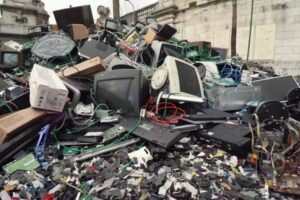
E waste is not one clean material. It is a mixture of materials and components, and some of them are hazardous.
- Landfill is a problem because it is the least controlled endpoint and it wastes recoverable materials
- Downstream partners matter because “recycled” can mean a lot of different things
- Documentation matters because businesses need proof for audits, ESG reporting, and internal accountability
Zero landfill electronics recycling: what it means in practice
“Zero landfill” typically means the program is built to maximize reuse and material recovery, and to avoid landfill disposal through controlled routing.
What that usually looks like:
- Vetted downstream partners
- Controlled processing and material recovery
- Clear accepted materials and handling rules
- Documentation options for businesses: certificates of recycling, and reporting support
Staging checklist: make pickups smooth and safe
- Keep e waste dry
- Separate batteries if possible
- Label gaylords or pallets
- Protect screens and lithium batteries
- Keep data bearing devices in a secure area
Common questions and misconceptions: quick hits
- “Is recycling always better than reuse”: Reuse first when possible because it avoids manufacturing a replacement
- “Does deleting files protect data”: No, use proper data destruction
- “Can I throw electronics in curbside recycling”: Generally no
- “Do businesses need paperwork”: Often yes, especially for audits, vendor rules, or ESG reporting
Frequently Asked Questions About a Carbon Footprint
What is a carbon footprint in simple terms
A carbon footprint is the total greenhouse gas emissions connected to something, including direct emissions and indirect supply chain emissions.
What does CO2e mean
CO2e means carbon dioxide equivalent: a single number used to represent the warming impact of multiple greenhouse gases.
What’s the difference between direct and indirect emissions
Direct emissions come from sources you control, like burning fuel. Indirect emissions come from electricity and the supply chain behind products and services.
What’s the difference between carbon footprint and carbon emissions
Carbon emissions are the gases released. A carbon footprint is the total emissions associated with an activity, product, or organization across its lifecycle.
What increases a carbon footprint the most
Big drivers are usually transportation, heating and cooling, electricity use, food choices and waste, and the products you buy and replace often.
How can I lower my carbon footprint quickly
Start with the fastest wins: reduce wasted energy, drive fewer miles, combine trips, cut standby power, reduce returns, and extend electronics life.
Does recycling reduce your carbon footprint
It can, especially when it replaces virgin material extraction and keeps products and materials in use longer, but reuse and life extension are often bigger wins.
Why do electronics have a high carbon footprint
Because a big portion of their footprint is embedded in mining, manufacturing, and global supply chains, and short replacement cycles repeat that impact.
What does zero landfill electronics recycling mean
It means electronics are routed through controlled programs focused on reuse and material recovery, avoiding landfill disposal and using vetted downstream partners.
Can EACR Inc provide recycling documentation for businesses
Yes, many organizations need documentation for audits, internal reporting, and sustainability programs, and EACR Inc can support that with appropriate records.
Conclusion: bring it home: one action step
A carbon footprint is total emissions tied to something, not just what comes out of your tailpipe. The biggest wins usually come from energy, transport, purchasing habits, and extending electronics life before recycling. When devices do reach end of life, proper electronics recycling helps support sustainability goals in a real, trackable way.
EACR Inc is a sustainability focused electronics recycling company with a zero landfill policy, committed to helping protect the environment through responsible recycling. Reach out to EACR Inc to set up an electronics recycling program for your business, school, or organization.