Barcode scanner recycling matters because these devices do not last forever, and they should not be thrown in the trash. That includes handheld barcode scanners, wireless scanners, warehouse scanners, retail POS scanners, industrial scanners, and older mobile scanning devices that are no longer in use.
Proper recycling matters because these devices contain plastic, metal, circuit boards, wiring, and sometimes batteries. Some scanner models, especially mobile or smart units, may also hold business or operational data that should be handled carefully at end of life. The good news is there are practical ways to recycle them, including drop-off recycling, bulk pickup, and e-waste containers for ongoing collection. EACR Inc. is an electronics recycling company that helps businesses and organizations recycle barcode scanners through drop-off, pickup, and container-based collection options.
What is Barcode Scanner Recycling?
Barcode scanner recycling is the process of collecting old, broken, or outdated barcode scanners and sending them through a proper electronics recycling stream. Instead of throwing them away, the devices are separated, processed, and handled as e-waste.
This can apply to a single scanner or an entire fleet of equipment. Whether a business is replacing a few retail scanners or clearing out large volumes of warehouse devices, barcode scanner recycling helps move that equipment into a more responsible end-of-life process.
Why Barcode Scanners Should Not Go in the Trash
They contain recoverable materials
Barcode scanners contain materials that can be recovered instead of wasted. That can include plastic housings, glass or scan windows, wiring, circuit boards, metals, and other internal components.
Even though scanners are relatively small, they are still electronics. Throwing them away means those materials are more likely to be lost instead of properly processed.
Some devices may contain batteries
Some barcode scanners include rechargeable batteries, especially wireless models, mobile computers, and more advanced handheld units. Those battery components change how the device should be handled at disposal.
Batteries should not be treated like regular trash. Once a scanner contains a battery, proper battery recycling becomes even more important from both a safety and handling standpoint.
Business devices may contain stored data
Some barcode devices may also contain stored data, especially mobile computers or scanner-enabled handhelds used in business operations. Depending on the equipment, that can include system settings, usage data, or other operational information.
That is why recycling is not just about material recovery. Proper barcode scanner recycling should also account for data protection when smarter or more advanced devices are involved.
Landfill disposal is the wrong outcome
Barcode scanners should be handled through proper recycling channels, not general waste. Like other electronics, they do not belong in the trash.
When devices are dumped instead of recycled, they add to the larger e-waste problem and waste materials that could have been recovered. A better option is sending them through an electronics recycling process built for devices like these.
What Materials Can Be Recovered From Barcode Scanners?
Barcode scanner recycling is not just about getting old devices out of the way. It is also about recovering materials that are still useful instead of sending them to waste.
Plastic housing and outer parts
Most barcode scanners have a plastic outer shell. That housing makes up a large part of the visible device and is one of the main materials involved in the recycling process.
Glass and scan window materials
Many scanners include a scan window or protective glass-like surface where the barcode is read. That material is small, but it is still part of the device’s overall construction and recycling stream.
Copper wiring and small metals
Inside the scanner, there may be copper wiring and small metal parts that help carry power and support internal connections. These materials are common in electronics and are one reason proper recycling matters.
Printed circuit boards and internal electronics
Barcode scanners also contain printed circuit boards and internal electronic components. These are the parts that help the device read, process, and transmit data, and they should be handled through a proper electronics recycling process.
Common Barcode Equipment That Can Be Recycled
Barcode scanner recycling often includes more than just the handheld scanner itself. Many businesses also need to recycle related equipment at the same time.
That can include:
- barcode scanners
- barcode printers
- mobile computers
- POS scanning equipment
- cradles and docks
- charging bases
- power supplies
- related accessories
For businesses doing upgrades or cleanouts, it usually makes more sense to recycle the full setup together instead of separating every device one by one.
Best Barcode Scanner Recycling Options
Drop-off recycling
Drop-off recycling is a good option for smaller quantities of barcode equipment. It works well for businesses, offices, retail stores, and local users that only have a limited number of devices to recycle.
It is simple, convenient, and often the easiest option when volume is low. Scheduled drop-off options can also make the process more organized.
Pickup for bulk barcode equipment
Pickup is the better option when a business has a larger amount of equipment. It works especially well for warehouses, retailers, healthcare networks, manufacturers, school systems, and multi-site companies replacing large numbers of scanners, printers, docks, and related devices.
This makes the process much easier operationally. Instead of moving everything yourself, bulk pickup helps clear equipment out with less disruption to day-to-day operations.
E-waste containers for ongoing collection
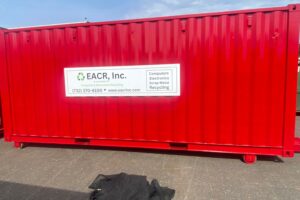
E-waste containers are a strong option for facilities that regularly replace handheld devices, scanners, printers, and related electronics. They work especially well for distribution centers, hospitals, retail chains, campuses, and larger commercial properties with ongoing turnover.
This is often the best long-term solution, not just a one-time cleanup tool. Instead of waiting for electronics to pile up, a container gives your site one consistent place to collect outdated barcode equipment as it comes out of service.
Trade-in or manufacturer programs
Trade-in or manufacturer programs can be worth checking if you are upgrading equipment. In some cases, they may offer credit or incentives for turning in older devices.
That said, not every scanner or printer will qualify. When equipment has no resale or trade-in value, proper recycling is still the right next step.
When a Business Should Use an E-Waste Container for Barcode Equipment
Barcode scanner recycling becomes much easier when a business has an ongoing way to collect old equipment instead of letting it pile up in random places. For many organizations, an e-waste container is the most practical option when scanner turnover happens regularly or in larger volumes.
Large warehouse and logistics operations
Warehouses and logistics operations often use large numbers of barcode scanners, mobile units, charging bases, and related hardware. When devices break, get replaced, or fall out of service, an e-waste container gives the site one central place to collect everything.
Retail chains replacing scanner fleets
Retail chains often replace POS scanners, checkout hardware, and related devices across multiple stores. An e-waste container makes that process more organized and helps keep old equipment from sitting in stockrooms or back offices.
Healthcare and lab environments
Healthcare and lab settings use barcode equipment for tracking, labeling, and day-to-day operations. A container can help these facilities keep outdated equipment separate, organized, and ready for proper recycling.
How to Prepare Barcode Scanners for Recycling
Barcode scanner recycling goes more smoothly when equipment is organized before drop-off or pickup. A little prep helps protect devices, improve handling, and make the process easier for everyone involved.
Separate scanners, printers, and accessories
Start by separating barcode scanners from printers, docks, cables, power supplies, and other accessories. That makes sorting easier and helps keep loads more organized.
Remove labels or company asset tags if needed
If scanners still have inventory labels, company tags, or internal tracking stickers, remove them if needed before recycling. This can help with internal cleanup and asset control.
Pack bulk loads safely for pickup or drop-off
For larger quantities, pack equipment in a way that keeps devices secure during transport. Grouping items carefully helps reduce breakage and keeps drop-off or pickup more efficient.
Barcode Scanner Recycling for Businesses
Barcode scanner recycling is especially important for businesses because equipment tends to build up in bulk. A few broken or outdated scanners may not seem like much at first, but across departments, locations, and storage areas, the volume adds up fast.
That is why businesses benefit from a structured recycling program. It helps with fleet refreshes, saves space, improves storage conditions, keeps facilities cleaner, and makes internal organization much easier. For larger programs, documentation may also be useful when companies want better visibility into how electronics are being handled.
Barcode Scanner Recycling for Retail, Warehousing, and Healthcare
Retail
Retail businesses often recycle POS scanners, checkout hardware, and related devices during store refreshes or equipment upgrades. A structured recycling process helps keep old hardware from piling up in back rooms and stock areas.
Warehousing and logistics
Warehousing and logistics operations often deal with rugged scanners, handheld mobile devices, charging stations, and printer replacements. Barcode scanner recycling helps these sites manage larger equipment turnover without creating clutter or storage issues.
Healthcare and lab settings
Healthcare and lab environments often rely on barcode devices for tracking, labeling, and operations. Organized collection and secure handling matter here because equipment may be replaced regularly and needs to move through a clean, controlled recycling process.
Why Work With an Electronics Recycling Company
Barcode scanner recycling is better handled through an electronics recycling company than through generic disposal. It is also better than waiting for old devices to pile up or relying only on limited trade-in options that may not apply to every piece of equipment.
More recycling options
A recycling company can offer different options based on your volume and needs. That can include drop-off, bulk pickup, and e-waste containers for ongoing collection.
Easier logistics
This is especially helpful for businesses with larger quantities of equipment. Instead of figuring out how to move everything internally, you can use a process built for electronics recycling.
More responsible handling
An electronics recycling company helps move barcode equipment through the proper electronics stream instead of general trash disposal. That is a more responsible outcome for scanners, printers, batteries, and related hardware.
Frequently Asked Questions About Barcode Scanner Recycling
Can barcode scanners be recycled?
Yes. Barcode scanners are electronics and can be recycled through a proper electronics recycling program.
Can barcode printers be recycled too?
Yes. Barcode printers can usually be recycled along with scanners and other related equipment.
Do barcode scanners contain batteries?
Some do. Wireless scanners, rechargeable models, and mobile scanning devices may include batteries that need proper handling.
How do businesses recycle old barcode scanners in bulk?
Businesses can recycle barcode scanners in bulk through pickup services or by using e-waste containers for ongoing collection.
What should I do with broken barcode scanners?
Broken barcode scanners should still be recycled through a proper electronics recycling process, not thrown away in the trash.
Can I recycle barcode scanners with chargers and docks?
Yes, in many cases scanners, chargers, docks, and related accessories can be recycled together as part of the same electronics load.
Should barcode scanners go in the trash?
No. Barcode scanners are electronics and should not be thrown in general waste.
Is pickup available for large amounts of barcode equipment?
Yes. Bulk pickup is often the best option for businesses with larger quantities of barcode equipment.
Can an e-waste container be used for scanners and related electronics?
Yes. An e-waste container can be a strong option for ongoing collection of scanners, printers, and related electronics.
Final Takeaway
Barcode scanners are small, but they are still electronics and should be recycled properly, especially when businesses are dealing with larger quantities. The right recycling option depends on volume, timing, and how often equipment is being replaced.
For some businesses, drop-off is enough. For others, pickup or an e-waste container makes more sense. EACR Inc. is an electronics recycling company that helps businesses recycle barcode scanners, barcode printers, and related equipment through drop-off, bulk pickup, and e-waste container solutions.