Ballast recycling starts with one simple fact: a ballast is a control device that manages electrical current so certain lights can start up and run safely. Without it, many fluorescent and HID lights would draw too much power, overheat, or fail prematurely.
Inside a fixture, the ballast usually sits in the housing—often a metal box mounted behind the lamp sockets—with wires running to the lamp holders and the incoming power. You typically won’t see it unless the fixture cover is off.
What a ballast actually does
- Starting support: helps the lamp ignite and turn on reliably.
- Current regulation: limits current once the lamp is running so it doesn’t overload.
- System stability: reduces issues like flicker, buzzing, slow starts, and “won’t stay on” failures in many setups.
Where Ballasts Are Found
Ballasts show up anywhere older lighting systems are still in service—especially in places built out for efficiency and durability.
Common locations include:
- Commercial ceilings and office buildouts
- Warehouses and industrial spaces
- Schools and municipal buildings
- Retail stores
- Garages and parking structures
Common fixture types include:
- Troffers (drop-ceiling fluorescent fixtures)
- Strip lights (long linear fixtures)
- High-bays (warehouse/industrial overhead)
- Wall packs (exterior wall-mounted lights)
- Canopy lights (overhangs, gas stations, building entrances)
Ballast vs. driver vs. transformer (quick clarity)
These get mixed up constantly—here’s the fast way to think about it:
- Ballast: controls current for older fluorescent and many HID systems.
- LED driver: the LED equivalent—regulates power for LED fixtures.
- Transformer: changes voltage (step-up/step-down) in certain lighting setups, but it’s not the same job as a ballast or driver.
Types of Ballasts You’ll See
Fluorescent ballasts
These are used with linear fluorescent tubes and certain CFL-based fixture systems. They’re most common in offices, schools, retail ceilings, and older commercial interiors.
HID ballasts
These are used for metal halide and high-pressure sodium lighting—often found outdoors or in high-output applications like parking lots, warehouses, and industrial sites.
Magnetic vs. electronic
- Magnetic ballasts: older, heavier, may hum, and can be more prone to flicker or slower starts.
- Electronic ballasts: newer, lighter, usually quieter, and generally run more efficiently with steadier performance.
Why Ballast Recycling Matters
Ballast recycling matters because a ballast is an electronic component, not “just metal you can toss in a scrap bin.” Even though it’s usually housed in a metal box, what’s inside is a mix of materials that needs controlled handling.
Ballasts commonly contain:
- Metals (housing and internal parts)
- Wiring and lead wires
- Coils and windings
- Capacitors and circuit components
Recycling them the right way keeps electrical components out of landfills and out of unmanaged scrap streams where the “metal value” gets prioritized and everything else gets ignored or mishandled. EACR Inc. follows a strict zero landfill policy.
Safety and Handling Basics
Treat ballast removal like basic electrical work: safe, controlled, and not rushed.
- Power off at the source and follow lockout/tagout practices in facilities
- Avoid cutting open components—there’s no reason to “see what’s inside”
- Keep units intact—don’t crush, smash, or dismantle them
The goal is simple: remove, contain, label, and route through the right recycling stream.
What not to do
- Don’t toss ballasts in general trash or mixed construction debris.
- Don’t throw loose ballasts into a metal dumpster without containment—damage and cross-contamination happen fast.
- Don’t cut wires short just to “make it fit.” Keep it simple: intact ballast, controlled storage, clear labeling.
How to Prepare Ballasts for Recycling
Step 1: Remove safely during fixture tear-down
For contractors and facilities teams, the cleanest workflow is to remove ballasts during fixture teardown, not after.
- Disconnect power properly
- Remove the ballast as a whole unit
- Keep the ballast paired with its wires when practical (less mess, easier staging)
If you’re doing a retrofit, stage ballasts as you go—don’t wait until the last day.
Step 2: Contain and label
Use basic containment that prevents damage and keeps things organized:
- Sturdy boxes or rigid bins (not flimsy bags)
- Label clearly as “ballasts” so they don’t get tossed into scrap or mixed electronics by mistake
This one step prevents most downstream sorting problems.
Step 3: Store properly until pickup/drop-off
Storage should protect the units and keep your staging area clean:
- Keep them in a dry area
- Store off the floor when possible (pallets or shelves help)
- Avoid impacts, crushing, and heavy stacking
That’s it. If you can remove safely, contain cleanly, and store dry, you’re doing ballast recycling the right way.
Ballast Recycling Options
Ballast recycling is pretty straightforward once you match the option to your volume and timeline. Most organizations fit into one of three paths.
Option 1: Drop-off (small quantities)
Best for small maintenance cleanouts—think a few fixtures, a couple boxes, or periodic replacements.
- Simple and fast if you’re nearby
- Works well for property maintenance teams and small businesses
- Good option when you don’t generate ballasts consistently
Option 2: Scheduled pickup (medium to large quantities)
Best for retrofits, re-lamping projects, and renovations where ballasts come off in bulk. Working with an electronics recycling company that will provide e-waste pickups is an easy solution.
- Ideal when you’re pulling ballasts across floors, buildings, or a full site
- Keeps the project moving (no stockpiling in hallways or storage rooms)
- Makes it easier to keep everything contained and documented
Option 3: Ongoing container program (recurring generation)
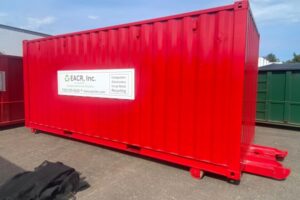
E-waste containers are best for schools, campuses, property management groups, and multi-site operations that generate lighting waste regularly.
- Set a standard process: remove → stage → container → pickup
- Keeps maintenance teams consistent across locations
- Prevents “we’ll deal with it later” piles from building up
What Happens After Collection
Sorting and consolidation
Ballasts should stay separate from:
- Lamps/bulbs
- Whole fixtures
- Mixed electronics
That separation matters because it reduces breakage, prevents contamination, and keeps processing clean and efficient.
Processing and material recovery
Ballasts are handled through electronics recycling channels—not treated like random scrap.
- Components are processed in controlled streams
- Metals recovery is part of the outcome, but it’s done alongside proper downstream management of the non-metal parts
- The goal is full material recovery where practical, with responsible routing for everything else
Documentation you can request
If you’re a business or institution, don’t treat paperwork like an afterthought. Ask for a certificate of recycling for internal tracking
Ballast Recycling for Contractors, Property Managers, and Facilities
Common scenarios
Ballasts most often show up during:
- LED retrofit projects (pulling legacy fluorescent/HID components)
- Tenant improvements (fast turnarounds, lots of fixture changes)
- Warehouse lighting upgrades (high volume, high ceilings, big staging needs)
- School and municipal maintenance cycles (recurring replacements across buildings)
Tips to keep projects moving
- Stage ballasts at the same time fixtures are staged. One staging area, one labeled flow.
- Don’t wait until end-of-job to figure out disposal. That’s how piles happen.
- Keep a simple count by box/bin. You don’t need perfect numbers—just a defensible estimate for scheduling and documentation.
FAQs About Ballast Recycling
Can ballasts go in the trash?
No. Ballasts are electronic components and should be handled through an electronics recycling stream, not landfilled or tossed in construction debris.
Are ballasts considered e-waste?
Yes. If it’s an electrical control component inside a fixture, treat it as e-waste.
Do I need to remove ballasts from fixtures before recycling?
In most cases, yes. Separating ballasts during tear-down helps with proper handling and keeps loads cleaner for processing.
Can I recycle ballasts with other electronics?
Sometimes, but they should still be segregated and labeled. Mixing them loose into a random electronics load is where damage and sorting issues happen.
What’s the best option for large retrofit jobs?
Scheduled pickup is usually the cleanest fit—especially when you’re removing ballasts across multiple rooms, floors, or buildings in a tight timeline.
Conclusion
Ballasts are electronic components, and they should be handled as e-waste—not tossed into scrap piles or trashed as “fixture leftovers.” If you set up a clear flow (remove, contain, label, recycle), ballast recycling becomes routine instead of a headache. Need a simple, scalable setup? Use pickup or container programs with clear staging guidance for ballast recycling—and make sure you get documentation you can file and reference later. Contact EACR Inc today.