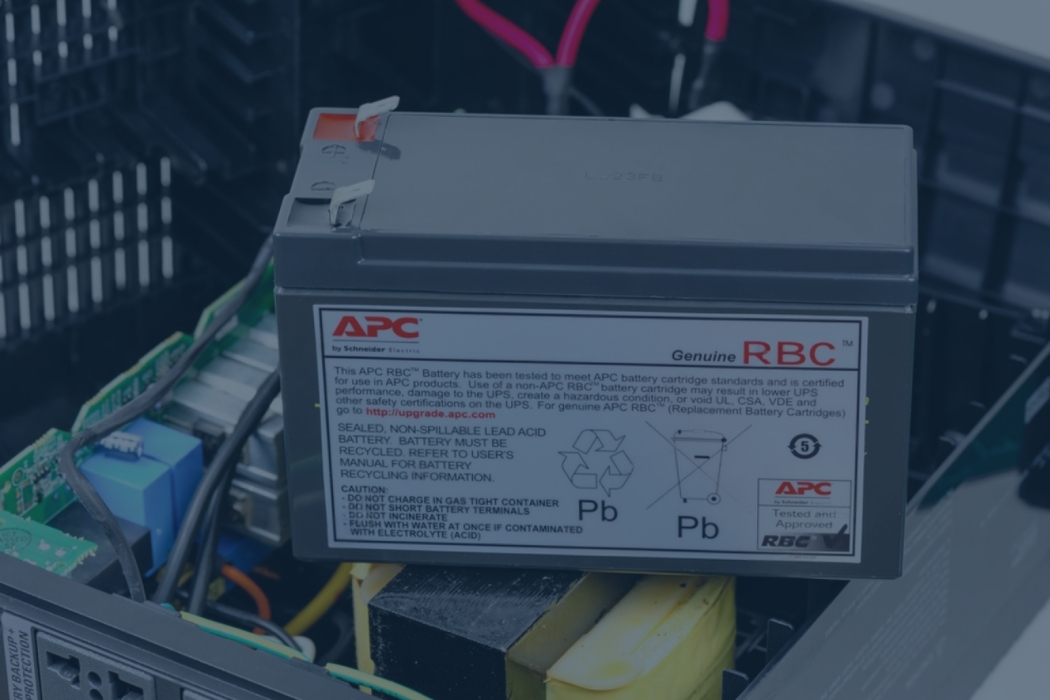
APC battery recycling starts with one simple reality: UPS batteries are common, heavy, and not something to toss in a dumpster. They’re easy to forget until you’ve got a stack of spent cartridges or a battery room project holding up a refresh.
This guide gives you the simplest safe path—return label, drop-off, or scheduled pickup—plus how to prep batteries and what records to keep, especially if you’re managing this for a business.
Quick Answer: How to Recycle an APC Battery
Most people fall into one of three routes:
- Manufacturer take-back / return label (when available for your battery cartridge)
- Battery drop-off containers (public drop sites provided by electronics recycling companies like EACR Inc. )
- Scheduled pickup (best for business quantities, battery rooms, multi-site)
If you’ve got one or two cartridges, drop-off can be fine. If you’ve got volume, damaged units, or multiple sites, pickup is usually the cleanest operational move.
What Counts as an “APC Battery” (So You Route It Correctly)
UPS battery cartridges vs larger systems
Not all “APC batteries” are the same thing:
- Small UPS replacement cartridges (common in Back-UPS/Smart-UPS setups)
- Larger 3-phase systems / battery cabinets / site battery strings (often handled differently)
Why type matters
Type determines the rules of the road: program eligibility, packaging requirements, and what kind of documentation you can expect. A return-label process that works for a cartridge often won’t apply to larger site systems, and business quantities usually need a more controlled logistics plan.
Option 1: Return Label / Take-Back Program (When You Have the Right Battery Cartridge)
When this option fits
This is ideal for small-to-mid replacement cartridges where return shipping is included through the program.
High-level steps
- Generate a prepaid label through the program portal.
- Re-pack the used battery in the replacement packaging when possible.
- Drop off through the approved carrier route.
Common gotchas
- Label access is typically for genuine replacement cartridges / program-eligible units (not every random battery in the room).
- Keep model info handy—if something doesn’t match, support usually asks for it immediately.
Option 2: Drop-Off Locations (Best for Small Quantities)
When drop-off makes sense
Drop-off works when you’ve got 1–2 units, transport is easy, and you can keep the battery secure, upright, and protected on the way there.
Where people typically drop off
- Battery collection networks (like EACR Inc sites)
- Retail battery take-back counters (varies by location)
- Local e-waste containers provided by companies like EACR Inc.
Option 3: Scheduled Pickup (Most Common for Businesses)
Best-fit scenarios
Pickup is usually the right tool for:
- Telecom sites, IT rooms, data centers, hospitals, schools, industrial battery rooms
- Planned UPS replacements or decommissions
- Multi-site operators that want one repeatable process
Why pickup reduces headaches
- Controlled handling and loading (less ad-hoc lifting and fewer mistakes)
- Cleaner tracking (site → quantity → removal date)
- Safer routing for damaged, suspect, or mixed-condition units where “just drop it off” becomes risky fast
How to Prepare APC Batteries for Recycling
APC battery recycling goes smoother when you treat it like a quick mini-project: inventory, stage, label, move.
Step 1: Inventory what you have
- Count units (or estimate by rack rows / cabinet counts if you’re still pulling them).
- Note site locations + access constraints (stairs, narrow doors, no loading dock, security check-in, elevator rules).
- Flag damaged units and separate them from intact units right away.
Step 2: Stage safely
- Keep batteries upright, stable, and protected from tipping.
- Prevent terminal contact (simple isolation/protection makes a real difference).
- Keep staging away from traffic, metal debris, and pinch points where units can get crushed or scraped.
Step 3: Package and label
- Use sturdy containers and set them up to prevent shifting and crushing.
- Label each load with: site, quantity, format (cartridges vs larger units), and condition notes.
- Mark damaged units clearly so they get controlled handling from the start.
Safety Basics (Non-Negotiables)
Why UPS batteries aren’t “normal scrap”
- Weight + stored energy + shorting risk means casual handling is how people get burned.
- Damaged units can go from “fine” to “incident” fast if they’re dropped, crushed, or bridged by metal.
The safest default rules
- Don’t mix damaged and intact units.
- Don’t leave loose batteries on pallets without stabilization.
- Don’t wait until the last day of a project to figure out routing and pickup—last-minute handling creates mistakes.
Rules and Compliance (Practical, Not Legalese)
Rules feel confusing because it’s a combo of state-by-state requirements, program rules, and transport expectations for commercial moves. What matters operationally: follow the program requirements for your battery type, and keep your documentation clean.
Documentation isn’t paperwork for the sake of paperwork. It’s how you support internal controls, audits, vendor management, and ESG reporting—while reducing liability when someone asks, “Where did these batteries end up?”
Records to keep (minimum set)
- Pickup/service record (date, site, quantities).
- Battery type/format notes + condition notes (intact vs damaged, any exceptions).
- Certificates of recycling
What Happens After Collection
- Consolidation and controlled routing based on battery type and condition.
- Downstream processing through appropriate battery channels (not a one-size-fits-all stream).
- Metals and other fractions route into proper recovery pathways, and remaining materials are handled through approved downstream methods based on the program.
FAQs About APC Battery Recycling
Can APC batteries go in the trash?
No—don’t do it.
Can I use a return label for any APC battery?
No—return labels are typically tied to eligible replacement cartridges/programs.
Where can I drop off an APC UPS battery?
Usually through battery drop-off networks, retail take-back counters, or local programs provided by electronics recycling companies like EACR Inc. that accept batteries—confirm before you go.
Do I need special packaging for pickup?
For business quantities, yes—secure, stable, and separated by condition is the baseline.
What should businesses keep for documentation?
Service/pickup records, quantities, type/format notes, condition notes, and certificates of recycling.
How do I handle a damaged or leaking unit?
Isolate it, label it clearly, keep it separated from intact units, and route it as a controlled load.
Conclusion
Recap: identify what you have, keep batteries stable and separated by condition, choose the right route (return label, drop-off, pickup), and keep clean records.
If you’re managing business volume, multiple sites, or a tight decommission timeline, EACR Inc. can help coordinate APC/UPS battery recycling services—including staging guidance, pickup routing, and documentation that stays tight.