Amplifier recycling is more important today than ever before. With rapid upgrades in audio equipment and the rise of e-waste, millions of old amplifiers end up collecting dust in basements or, worse, in landfills. Tossing these devices away isn’t just wasteful—it also creates serious environmental risks.
Amplifiers are made with metals, plastics, wiring, and sometimes hazardous components that must be handled properly. Left untreated, these materials can harm the environment and waste reusable resources. Recycling is the only responsible option.
That’s where EACR Inc. comes in. As a licensed electronics recycler, EACR helps businesses, schools, and individuals recycle amplifiers safely, legally, and sustainably.
Why Amplifier Recycling Matters
Environmental Concerns
Amplifiers contain metals, plastics, and circuit boards that don’t break down in landfills. When these parts are left to sit, hazardous substances—like lead solder in older models—can leak into soil and water. Recycling ensures these materials are reclaimed, reused, and kept out of the environment.
Data and Privacy Concerns (for Smart/Connected Amps)
Modern amplifiers and receivers aren’t always “dumb” equipment—many connect to Wi-Fi or store user data such as account details, settings, or even linked apps. For businesses, schools, or government users, this raises privacy risks if devices are discarded carelessly. Recycling with a company that includes secure data destruction as part of the process provides peace of mind and protection from potential breaches.
What’s Inside an Amplifier? (And Why It’s Recyclable)
When it comes to amplifier recycling, it helps to understand what’s inside these devices. Amplifiers are built with a mix of metals, plastics, and electronics that can often be reused if handled the right way.
Common Materials
- Steel and aluminum chassis: Provides strength and structure, both easily recyclable.
- Copper wiring and coils: Highly sought-after for reuse in new electronics and wiring.
- Circuit boards with recoverable metals: Contain copper, gold, and other materials worth reclaiming.
- Plastic housings, knobs, and connectors: Certain plastics can be broken down and recycled into new products.
Hazardous Components
- Lead solder in older amplifiers: Dangerous to the environment if left in landfills.
- Capacitors that store electrical energy: Require safe removal and disposal.
- Small batteries or rechargeable backup cells: Found in some models, these must be processed separately to avoid leaks or fire risks.
What Parts of an Amplifier Can Be Recycled?
One of the biggest advantages of amplifier recycling is just how much of the device can be recovered and reused. Key parts include:
- Metals (copper, aluminum, steel): Melted down and reused in manufacturing.
- Circuit boards: Processed for reusable elements such as copper, gold, and silver.
- Wiring and coils: Stripped and recycled for copper recovery.
- Plastic casings: Depending on the type, plastics may be recycled into new products.
- Speakers and integrated parts: When separated from the unit, many of these components can also be recycled.
How to Recycle Old Amplifiers Responsibly
Not all recycling options are equal. Choosing the right path ensures your amplifier is handled safely and sustainably.
Drop-Off at Electronics Recycling Centers
Amplifiers can’t be placed in your curbside recycling bin—they contain electronics, metals, and hazardous parts that require specialized handling. Licensed electronics recycling centers have the equipment and expertise to dismantle amplifiers safely and recover reusable materials.
Manufacturer Take-Back Programs
Some audio brands offer trade-in or recycling programs for old amplifiers. These can be convenient and sometimes even provide store credit. However, not every manufacturer participates, so availability depends on the brand.
Partnering with EACR Inc.
The easiest and most reliable option is to work with an electronics recycler like EACR Inc. With more than 25 years of experience, EACR offers solutions for schools, music studios, event companies, and businesses of all sizes.
- Drop-off services at their Lakewood, NJ facility
- Bulk pick-up options for larger recycling needs
- Mail-in programs and containerized solutions for convenience
- A zero landfill policy that ensures all reusable materials are properly recovered
The Amplifier Recycling Process at EACR Inc.
Recycling an amplifier may seem complicated, but EACR Inc. makes the process simple, safe, and efficient. Here’s how it works.
Collection and Sorting
Whether you drop off your amplifier, schedule a bulk pick-up, or use container services, EACR Inc. starts by gathering devices in a secure and organized way. Once received, amplifiers are sorted by type and condition to determine the best recycling method.
Disassembly and Data Destruction
Next, the amplifiers are carefully taken apart. Batteries, capacitors, and any backup cells are removed to prevent hazards. For smart or connected amplifiers, EACR ensures any stored data—like account information or settings—is securely destroyed.
Material Recovery
The disassembled components are separated by material type. Metals, plastics, and circuit boards are all processed individually. Copper wiring, aluminum chassis, and even precious metals from circuit boards are extracted and prepared for reuse.
Final Processing
Recovered materials are sent back into manufacturing streams where they can be used to create new products. This process supports the circular economy by keeping reusable resources in circulation rather than wasting them in landfills.
The Benefits of Recycling Amplifiers
Amplifier recycling goes beyond clearing out old audio gear. The benefits include:
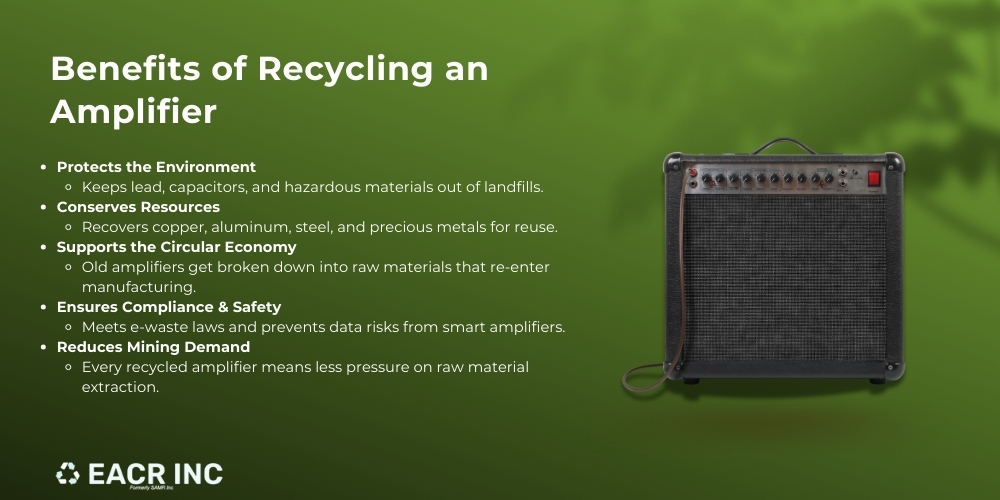
- Reduces demand for new raw materials: By reclaiming copper, aluminum, and steel.
- Prevents hazardous waste from polluting landfills: Lead solder and capacitors are handled properly.
- Supports a sustainable, circular economy: Old electronics are broken down and reintroduced into manufacturing.
- Keeps businesses compliant with e-waste laws: Avoid fines and stay aligned with environmental regulations.
- Provides peace of mind: Secure data destruction ensures sensitive information doesn’t end up in the wrong hands.
Preparing Your Amplifier for Recycling
Before you recycle your amplifier, a few quick steps can make the process smoother:
- Unplug the device and disconnect all cables.
- Back up data from smart amplifiers or receivers that store account information or settings.
- Contact EACR Inc. for guidance—whether it’s a drop-off, bulk pick-up, or an e-waste container service, they’ll walk you through the next steps.
Conclusion
Amplifier recycling is an important step toward protecting the environment, meeting compliance standards, and supporting a more sustainable future. Instead of letting old amps gather dust or end up in the trash, recycling ensures they’re handled safely and responsibly.
Contact EACR Inc. today for amplifier recycling services that keep electronics out of landfills and support a greener future.