

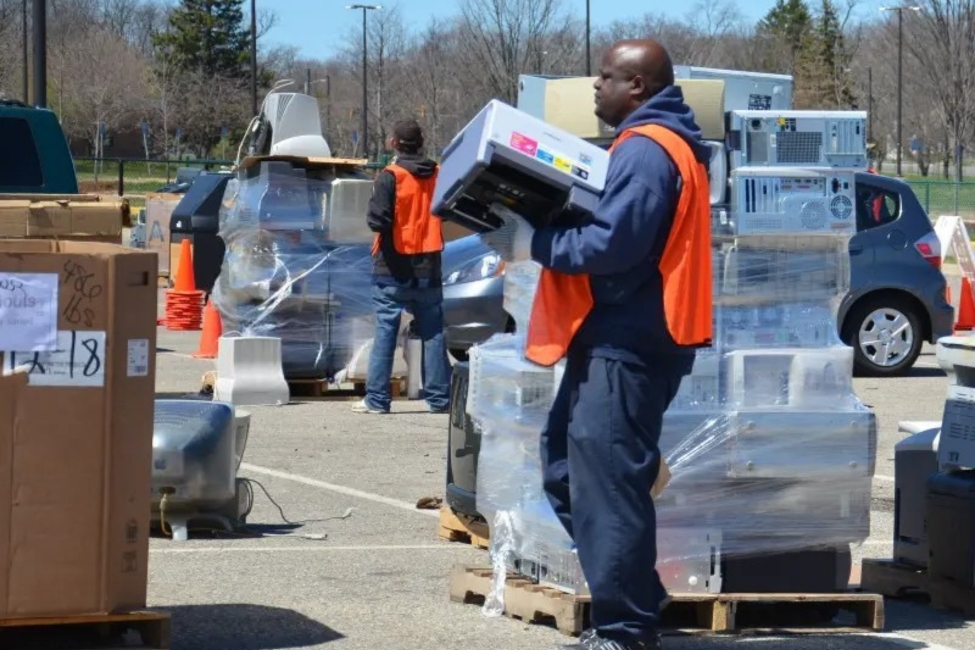
Municipal recycling programs are local systems designed to collect, sort, and recycle everyday waste from households, schools, and businesses. Instead of sending everything to the landfill, these programs recover materials that can be reused, conserving resources and reducing environmental impact.
Why do they matter? Towns, schools, and communities benefit when waste is managed responsibly. Recycling keeps neighborhoods cleaner, reduces pollution, and ensures that resources don’t go to waste—including electronics, which are one of the fastest-growing waste streams in the world.
Here’s the big picture: the United States generates hundreds of millions of tons of municipal solid waste every year, and millions of pounds of electronics are part of that total. Without structured programs in place, most of it would end up in landfills. Municipal recycling makes a real difference by turning waste into opportunity.
Understanding Municipal Recycling Programs
Municipal recycling programs are the backbone of community waste management. Run by cities, counties, or townships, these programs provide convenient ways for residents to recycle materials instead of discarding them.
How They Work
Local governments establish collection routes, drop-off sites, and processing facilities. Residents place recyclables into bins, which are then collected and delivered to recycling centers where materials are sorted, processed, and prepared for reuse. Increasingly, electronics collection is included, ensuring devices like computers and TVs are handled safely.
Materials Typically Included
Most municipal programs handle:
- Paper and cardboard
- Plastics
- Glass bottles and jars
- Aluminum and steel cans
- Electronics like computers, monitors, and small devices
The Role of Municipalities
Municipalities act as organizers and overseers. They coordinate with recycling companies, set rules for collection, and ensure compliance with state and federal environmental standards. Electronics add another layer of responsibility, since devices often contain hazardous materials that require specialized processing.
Environmental Benefits of Recycling Programs
Reduction in Landfill Waste
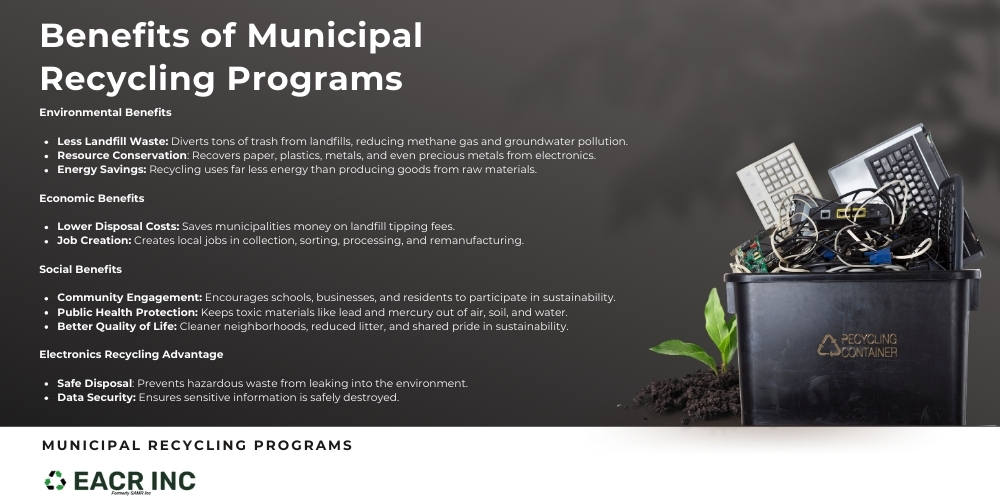
One of the biggest wins of municipal recycling is diverting waste from landfills. Less landfill waste means fewer harmful pollutants like leachate in groundwater and methane gas in the atmosphere. Electronics recycling is especially critical here—old TVs, monitors, and batteries can leak toxic materials if left in landfills.
Resource Conservation
Recycling materials like paper, plastics, and metals reduces the demand for raw resource extraction. For electronics, this is particularly impactful: circuit boards and wiring contain copper, gold, and rare earth metals that can be recovered and reused instead of mined.
Energy Savings
Producing goods from recycled materials requires far less energy than making them from scratch. For example, recycling aluminum cans saves up to 95% of the energy needed to make new ones (The Aluminum Association, 2021). Electronics recycling also conserves energy by recovering materials without the heavy footprint of mining and refining.
Economic Advantages for Communities
Lower Waste Disposal Costs
Every ton of waste diverted from a landfill saves municipalities money on tipping fees. Electronics recycling helps cut costs too—many communities avoid high disposal fees for hazardous components by recycling devices through licensed facilities.
Job Creation
Recycling supports local economies by creating jobs at every stage—collection, sorting, processing, and remanufacturing. Electronics recycling is no different: skilled roles in dismantling, material recovery, and data destruction are in demand and add to the employment benefits.
Social Impact of Municipal Recycling
Community Engagement and Education
Municipal recycling programs do more than manage waste—they engage people. By encouraging households, schools, and businesses to participate, these programs build awareness around the importance of recycling. When residents see electronics, plastics, and paper being collected in their own neighborhoods, it creates a sense of shared responsibility and community pride.
Improved Public Health
Recycling reduces the amount of waste ending up in landfills or being illegally dumped, which directly improves public health. Less landfill waste means fewer harmful pollutants entering the air and water supply. Electronics recycling plays a big role here too—properly processing devices keeps toxic materials like lead, mercury, and cadmium out of the environment, protecting families and future generations.
Enhanced Quality of Life
Cleaner streets, reduced litter, and better-maintained public spaces all improve the day-to-day experience of living in a community. Municipal recycling programs foster this improvement. People take pride in living in areas that actively work toward sustainability, and that pride strengthens the community as a whole.
EACR Inc.’s Role in Municipal Recycling
EACR Inc. partners with municipalities, schools, and organizations to deliver electronics recycling solutions that complement traditional recycling programs.
- Specialized electronics recycling collection bins are provided for safe, convenient electronics drop-off.
- Scheduled pickups ensure materials are collected regularly without burdening municipal staff.
- At EACR’s licensed facility, all electronics are processed under a strict zero-landfill policy, ensuring nothing is wasted.
- Sensitive data on devices is destroyed using secure methods, giving municipalities peace of mind when handling computers, servers, and other equipment.
By adding these services, EACR helps communities expand their recycling reach and responsibly manage one of the fastest-growing waste streams in the world: electronics.
How Municipal Recycling Programs Operate
Program Setup and Planning
Successful recycling programs start with planning. Municipalities often consult with electronics recycling experts like EACR to assess community needs, evaluate waste streams, and develop a plan that balances convenience and compliance.
Bin Placement and Collection
Accessibility is key. Recycling bins for paper, plastics, and electronics are placed at schools, municipal buildings, and community centers so residents can easily participate. EACR provides electronics recycling containers and coordinates pickups on a set schedule, keeping the system reliable and simple.
Processing and Recycling
Once collected, materials are transported to recycling facilities where they’re sorted and processed. With electronics, this means carefully processing devices, and ensuring that harmful materials are contained and properly recycled Each step is designed to maximize recovery while protecting the environment.
Challenges and Solutions for Municipal Programs
Common Challenges
Many communities face the same obstacles when it comes to recycling:
- Low public participation rates.
- Funding shortages that limit program reach.
- Logistical hurdles in collecting diverse materials like electronics alongside traditional recyclables.
Innovative Solutions
The good news is that these challenges have solutions. Public education campaigns boost participation. Grants and public-private partnerships can fund programs. And modern technology—from route optimization software to advanced sorting equipment—makes recycling more efficient.
How EACR Supports Overcoming These Issues
EACR Inc. provides tailored electronics recycling programs that solve common roadblocks. By offering secure e-waste collection containers, flexible pickup schedules, and licensed processing, EACR makes electronics recycling simple for municipalities. The zero-landfill approach and guaranteed data destruction add layers of compliance and trust, helping towns and cities strengthen their overall recycling programs.
Frequently Asked Questions
A municipal recycling program is a system organized by a local government to collect, process, and recycle materials like paper, plastics, glass, metals, and electronics. These programs reduce landfill waste, conserve resources, and support sustainability goals.
Electronics often contain hazardous materials like lead and mercury, which can harm the environment if not handled properly. Recycling electronics recovers reusable metals, which reduce the need for mining new resources
They reduce landfill waste, improve public health, create jobs, and enhance quality of life. Including electronics recycling adds another layer of protection by keeping toxic materials out of the environment.
EACR Inc. provides secure e-waste collection containers, scheduled pickups, and processing at a licensed, zero-landfill facility. The company also ensures complete data destruction for devices, giving municipalities compliance and peace of mind.
Common issues include low public participation, funding gaps, and logistical hurdles for collecting different types of recyclables. Partnering with experts like EACR Inc. helps overcome these challenges through tailored solutions.
Final Thoughts – Why Recycling Programs Matter
Municipal recycling programs deliver wide-ranging benefits: they protect the environment, conserve resources, save money, create jobs, and improve community well-being. When electronics are included, these benefits expand even further by addressing a waste stream that grows every year.
Partner with EACR Inc. to build or strengthen your municipal recycling efforts. From planning and logistics to electronics collection and secure processing, EACR provides the tools and expertise to help your community recycle responsibly—and sustainably. Contact us today to get started.